Agency Pricing Models: Which One Scales a Productized Agency [2026]
Compare the best agency pricing models and learn which one helps productized agencies scale with predictable recurring revenue.

Peace Akinwale

Almost every agency starts the same way: charging by the hour. It feels safe because it maps your cost to your price.
Then you get good and fast, and the math starts working against you. Billing by the hour caps your revenue at the number of hours your team can physically work, and it punishes you for being efficient. The faster you deliver, the less you earn.
The agencies that scale are the ones that decouple price from time. They move to models where what a client pays reflects the outcome and the access they’re buying, not the hours the work took. This guide covers the main agency pricing models, shows which ones scale, and how ManyRequests helps manage billing and delivery regardless of your chosen model.
There are seven pricing models worth knowing, and here’s a brief overview of how they work:
This is how these pricing models work in practice.
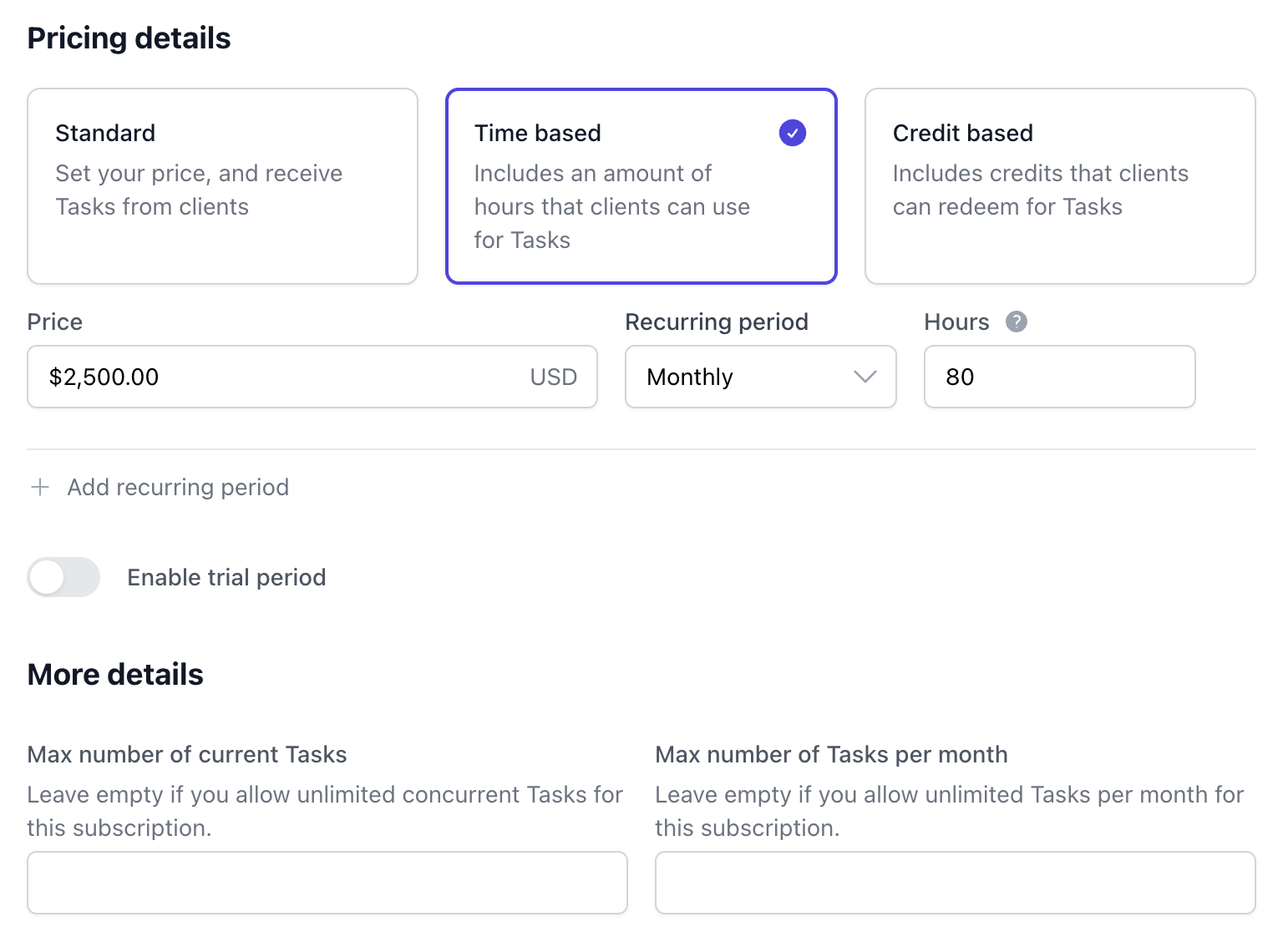
Hourly is the simplest model: you track time and bill it at a set rate. It’s transparent and easy for a client to understand, which is why most agencies use it.
It’s the best fit if your work is genuinely unpredictable: consulting and audits, for example, often involve unpredictable scope and are not capped by hours. It stops being a good fit the moment your work becomes repeatable, because hourly ties your income to the clock and rewards are tied to how slow you can deliver.
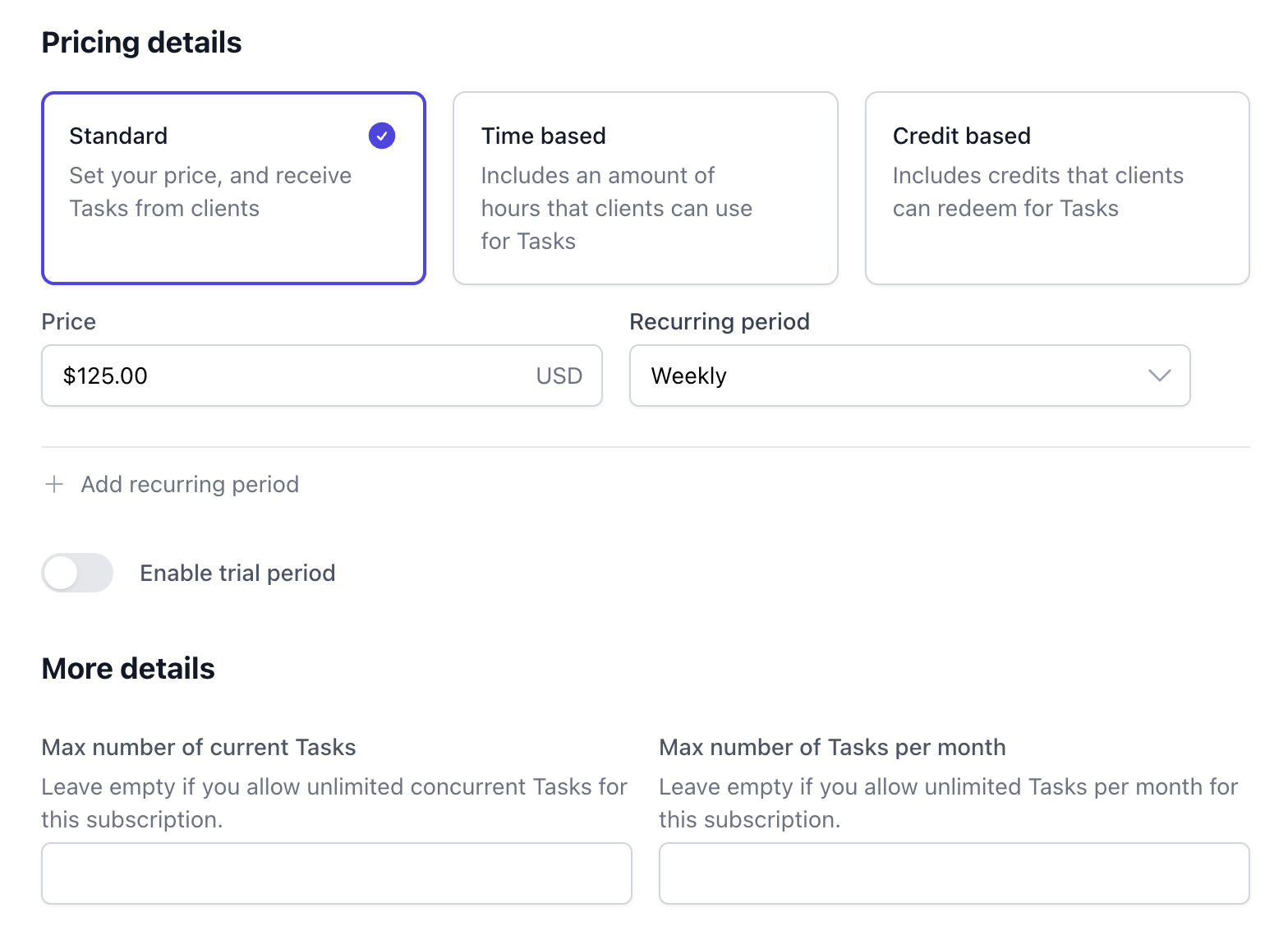
Project-based pricing uses a flat fee for a defined deliverable. These are one-off builds with a clear endpoint, limited scope, and start from zero everytime. The client pays for an outcome, regardless of how long it took.
It’s a good fit when the work has a natural endpoint and you can scope it tightly.
A retainer involves a fixed monthly fee for ongoing access or hours. This model produces predictable recurring revenue, which is why it’s a common step up from project-based work.
Retainers also support continuous work with a known volume and can work well with the right structure. And that’s why you need to have a defined scope and what’s out-of-scope to avoid issues later into the relationship.
We wrote more about the retainer-versus-subscription breakdown and when to use it.
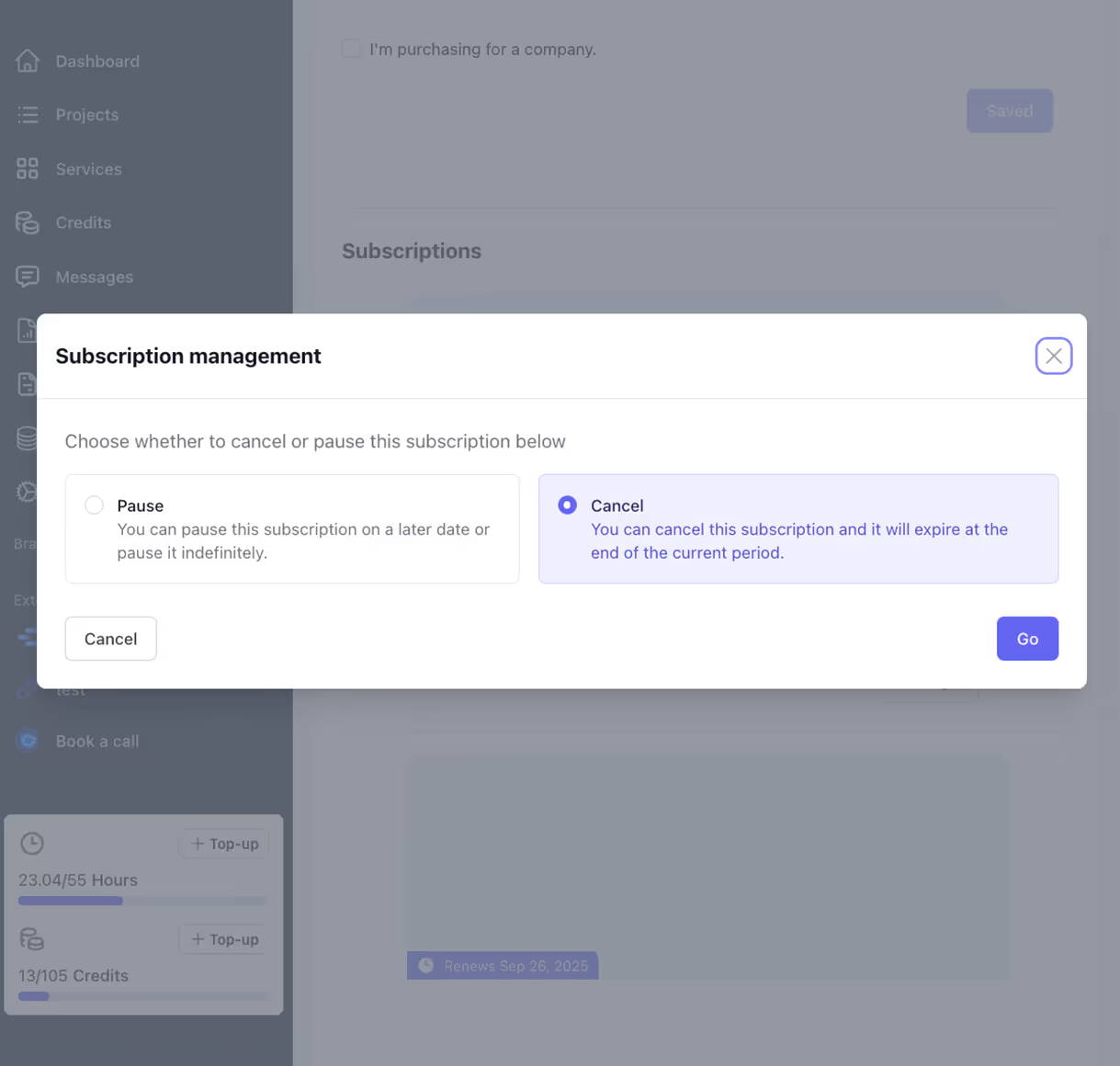
On ManyRequests though, you can structure your retainer services and charge clients every month through Stripe. You can also configure your portal in a way that they can easily pause their subscription (during financial downtimes) and/or even cancel their subscription, without the awkward ghosting some clients may do.
Worth a look? Sign up for a 14-day free trial of ManyRequests to use it for your productized agency.
A subscription pricing is where you charge a fixed monthly fee for queued deliverables. Your clients submit requests, your team works them one (or a set number) at a time on an agreed turnaround time. This is the productized model, and it’s where most scaling agencies end up.
This model is the best fit for repeatable, productized services designed to scale (think Webflow design or graphic design agencies). If every client needs something completely custom, productize the service first.
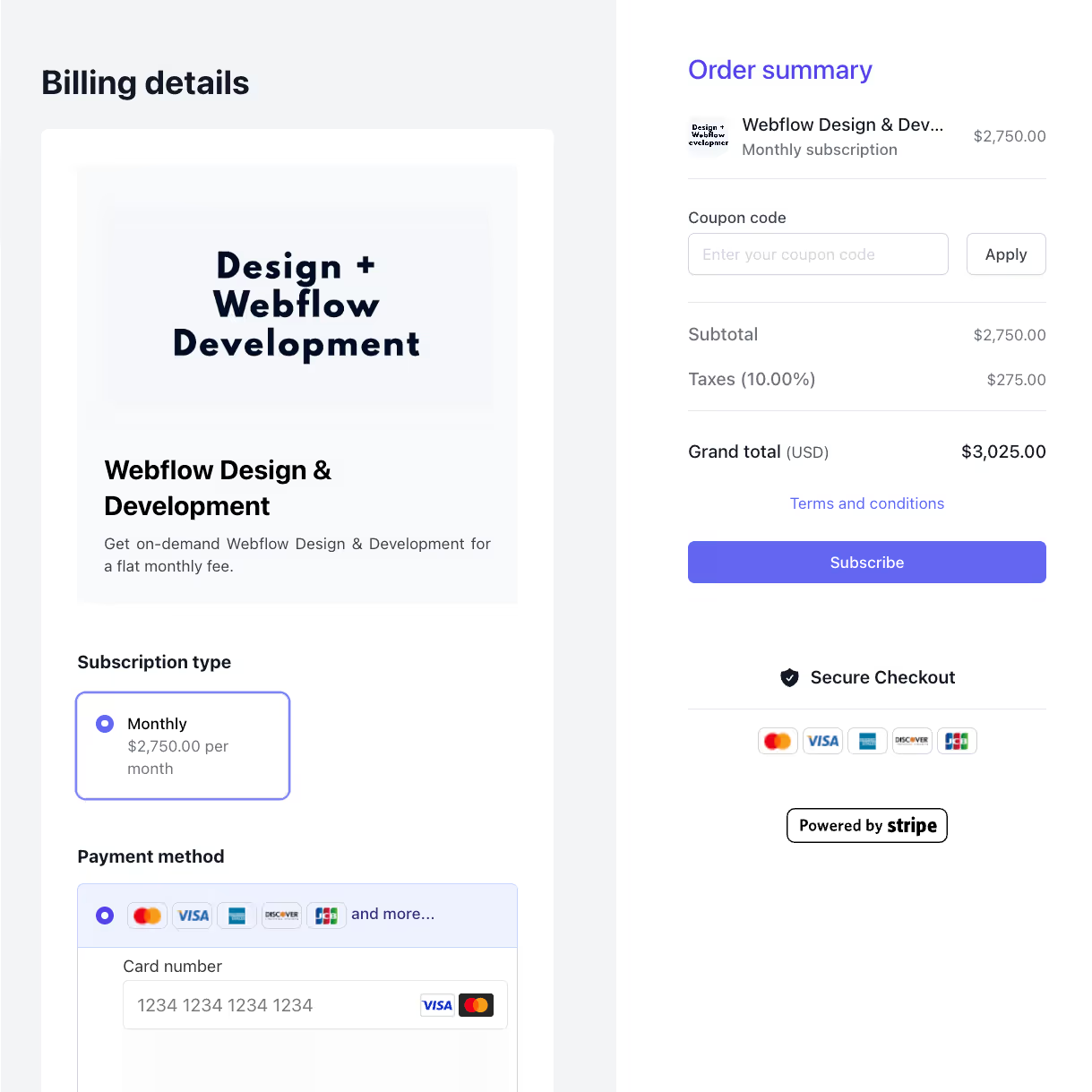
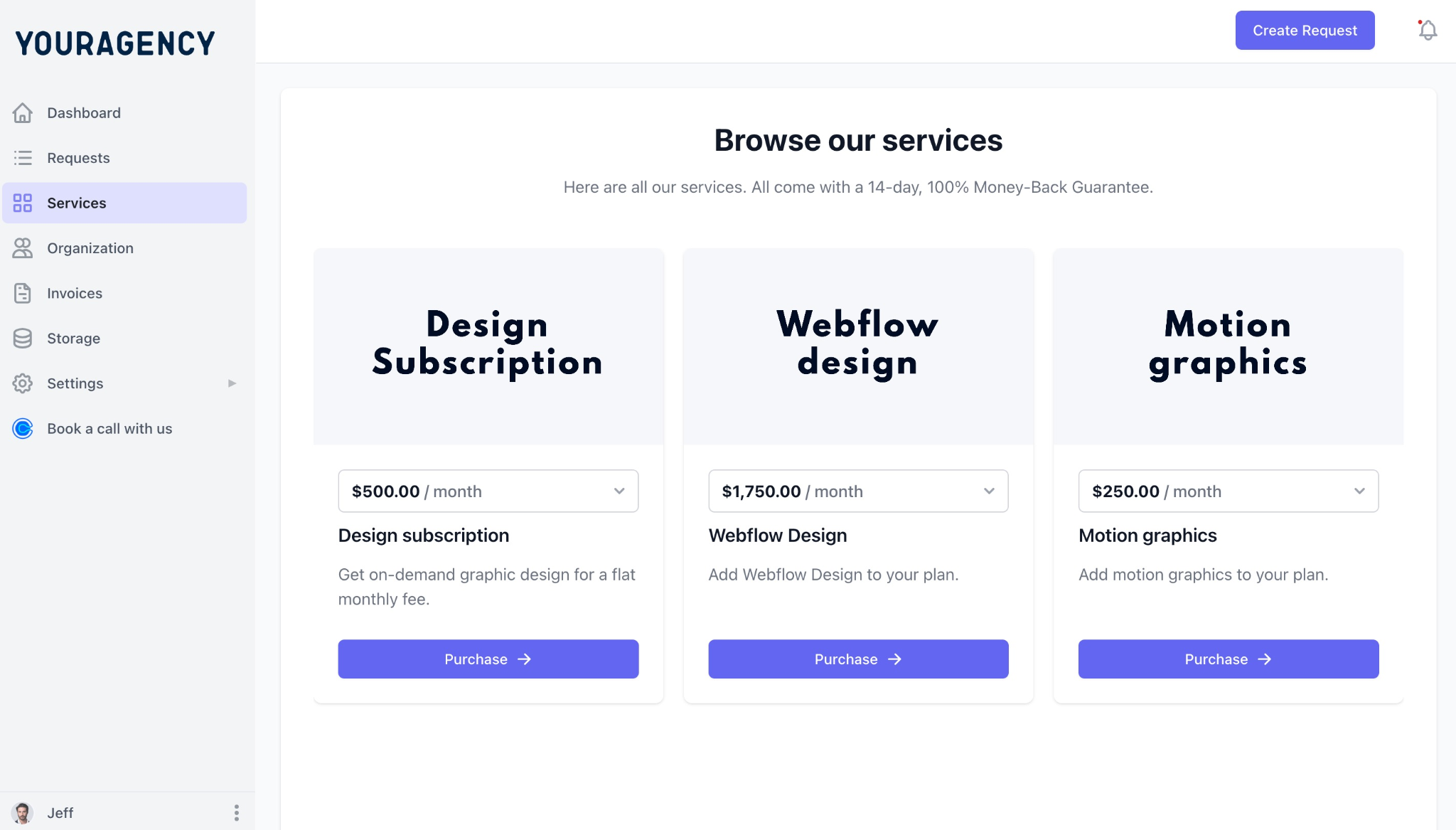
You can configure subscription-based pricing on ManyRequests as well. You create your services, peg a monthly price, and provide access so clients can check your catalog and “buy” the services. Every request from that catalog enters one admin queue where you can assign tasks and monitor progress.
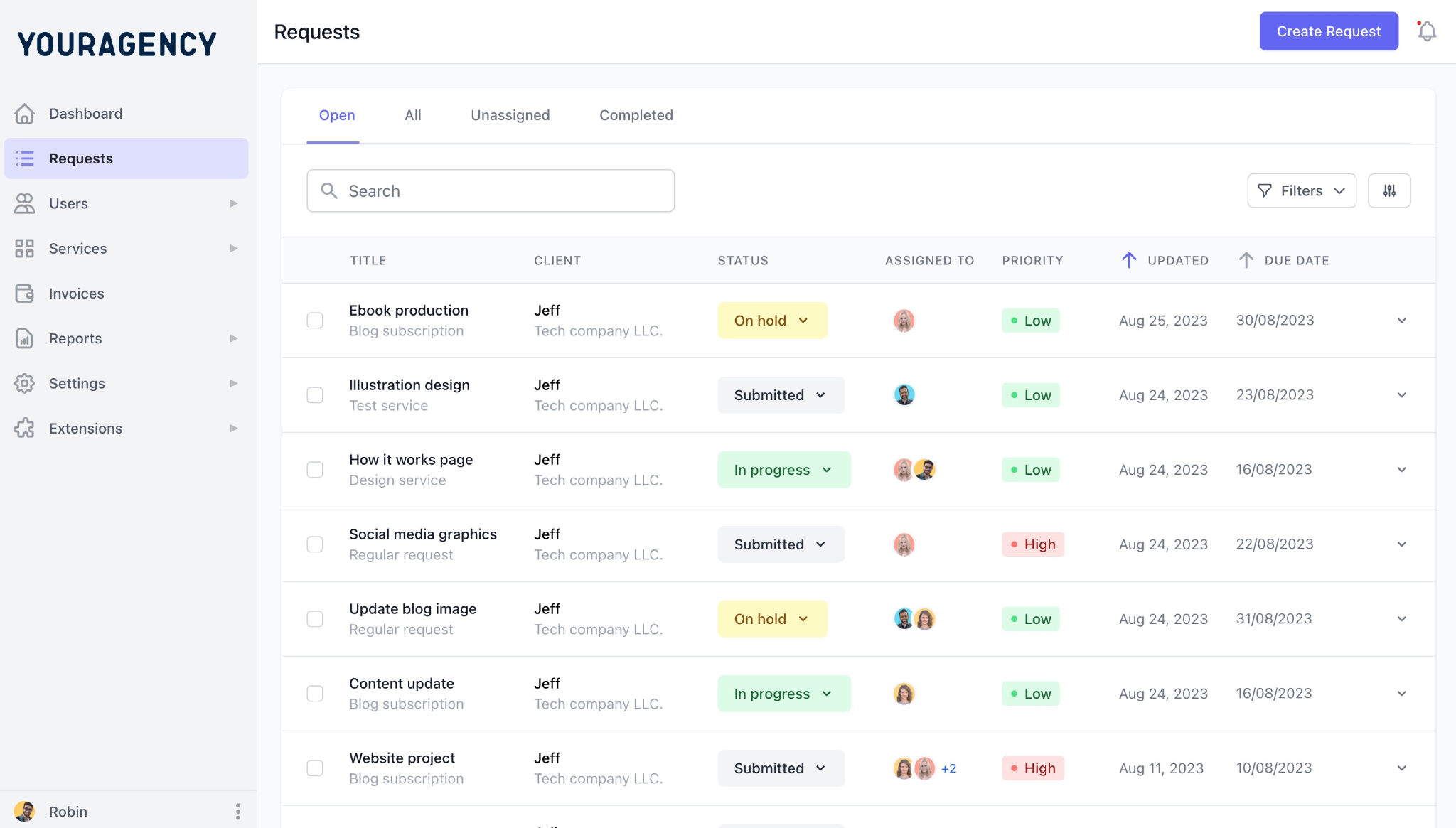
Using ManyRequests with this subscription-based model is how SquidPixels does more than 17,000 design requests annually, and also how Flowout scaled to $1M ARR in under two years. A flat subscription decouples revenue from hours, which is the only way to add clients without adding admin.
Sign up for a 14-day free trial to see how to organize agency operations and onboard clients faster.
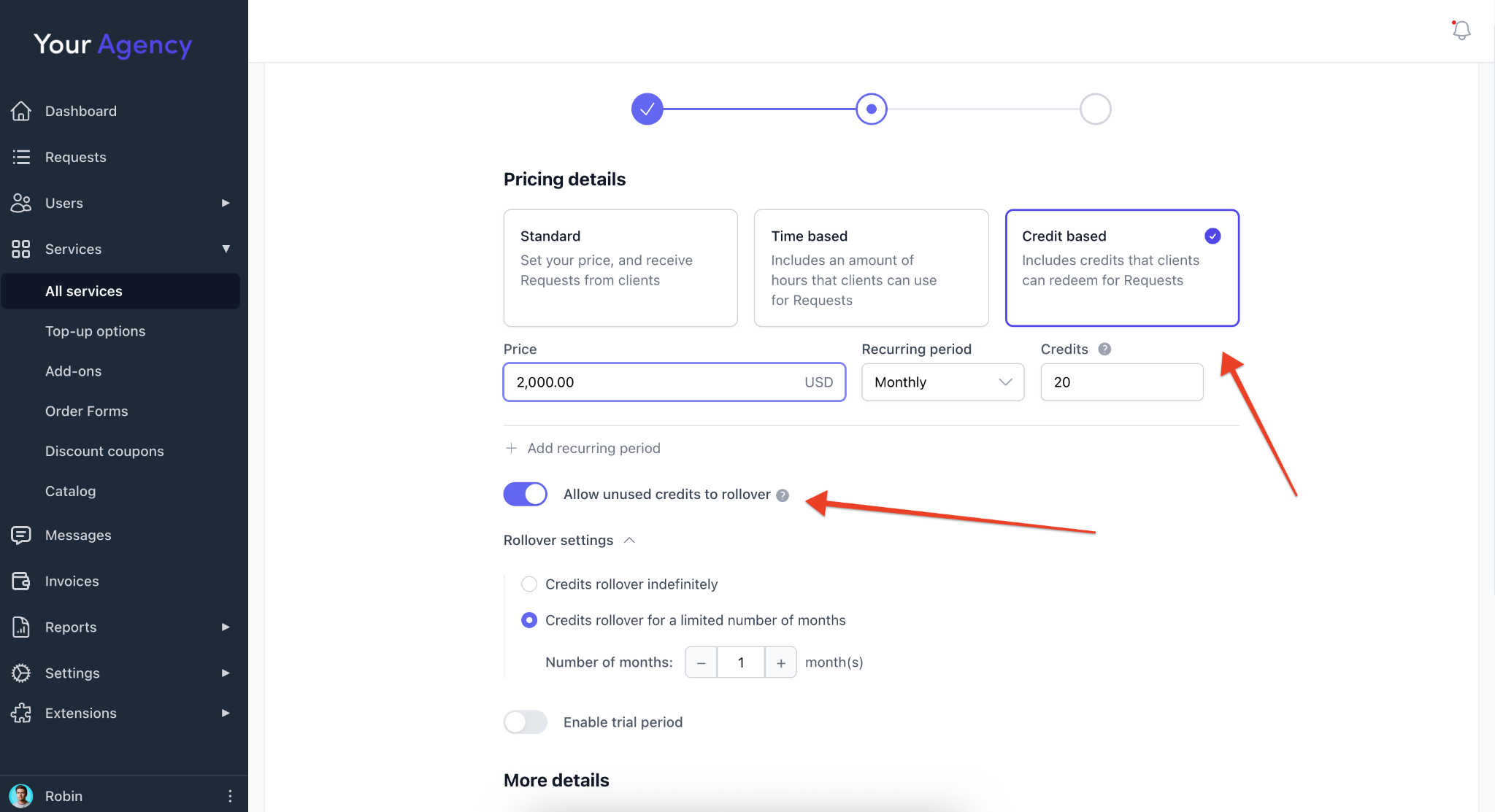
The credit-based pricing model allows clients to buy a bank of credits to spend on requests. It keeps the predictable monthly payment while giving the client room to vary what they ask for.
It accommodates variable monthly needs and offers flexible recurring options, which makes it a good fit when clients have uneven needs month to month. It’s also a good fit if you have varied effort levels for your services.
You can configure credit-based pricing on ManyRequests as well. You simply set how many credits a service costs, the client buys credits through Stripe, and unused credits roll over so nothing is wasted. The client sees their balance in the portal, and your team works from the same queue as every other model.
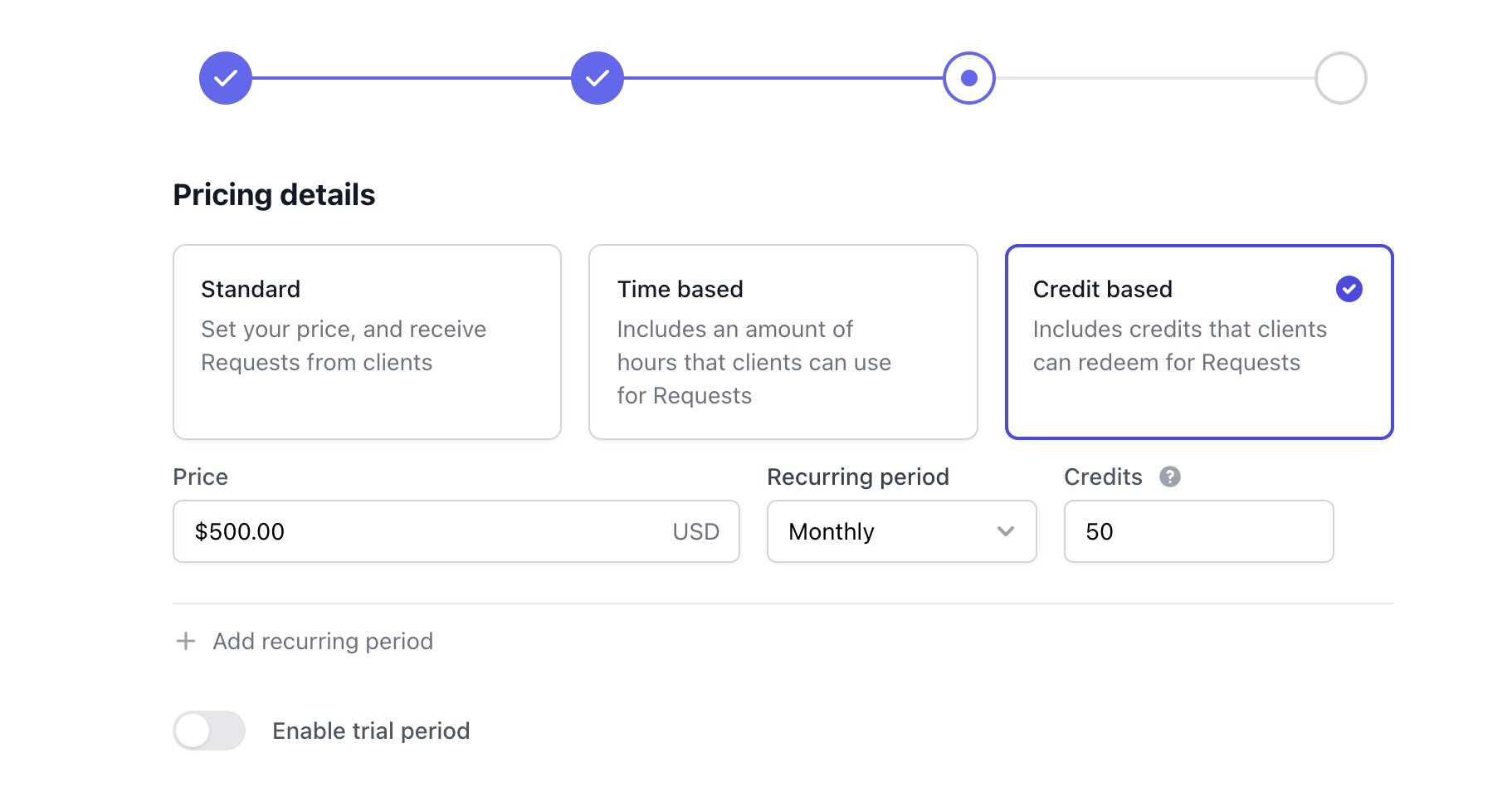
Value-based pricing sets the price on the outcome you create for the client. It’s a good fit for high-impact work that you can quantify but can be hard to standardize. That’s because every engagement is priced on its own business case.
However, if you have a track record of delivering, you can use this model to increase your revenue, especially if you’re in a niche like PR or branding.
You’ll still need somewhere to bill and deliver these projects. On ManyRequests, you can configure value-based engagement as a flat one-off or a monthly subscription priced on the value you scoped. The clients spell out their needs, and you can track the efforts committed to each part of it in the ManyRequests project dashboard and manage payments in the same platform.
Performance-based pricing ties your fee to measurable results, like leads generated or a percentage of ad spend. The incentive is fully aligned, you win when the client wins.
It’s a good fit when you’re confident you can move the numbers and you want the upside. The risk is obvious: a slow quarter on the client's side will affect your revenue, so most agencies pair a base fee with the performance upside rather than going for a cut based on performance.
With ManyRequests, you can charge the base fee as a subscription or retainer and invoice the performance bonus on top, keeping the recurring portion automated so only the variable piece needs a manual touch.
If your goal is to grow without your workload growing at the same rate, subscription and retainer pricing are the answer. They pull ahead of hourly and project work on three fronts:
That last point is where the operational side decides whether the pricing works. A subscription only scales if the system behind it allows you, which is what ManyRequests was designed for. You can take requests, bill clients for it, and also get a report dashboard to see the agency’s operations in one place instead of multiple separate tools.
Whichever model you choose, you can use ManyRequests to run it in one place. Here is how each maps to ManyRequests, all billed through Stripe with no per-client pricing and no transaction fees beyond Stripe's own:
All you need to do is sign up for a free trial of ManyRequests, create a service catalog like the one described below, and configure each service to reflect your preferred pricing model.
You don’t have to get this right on the first try; pricing evolves as your agency matures. But you can answer these four questions to get started on the right model:
Here is how three productized agencies, all of whom use ManyRequests, price their subscriptions across different services:
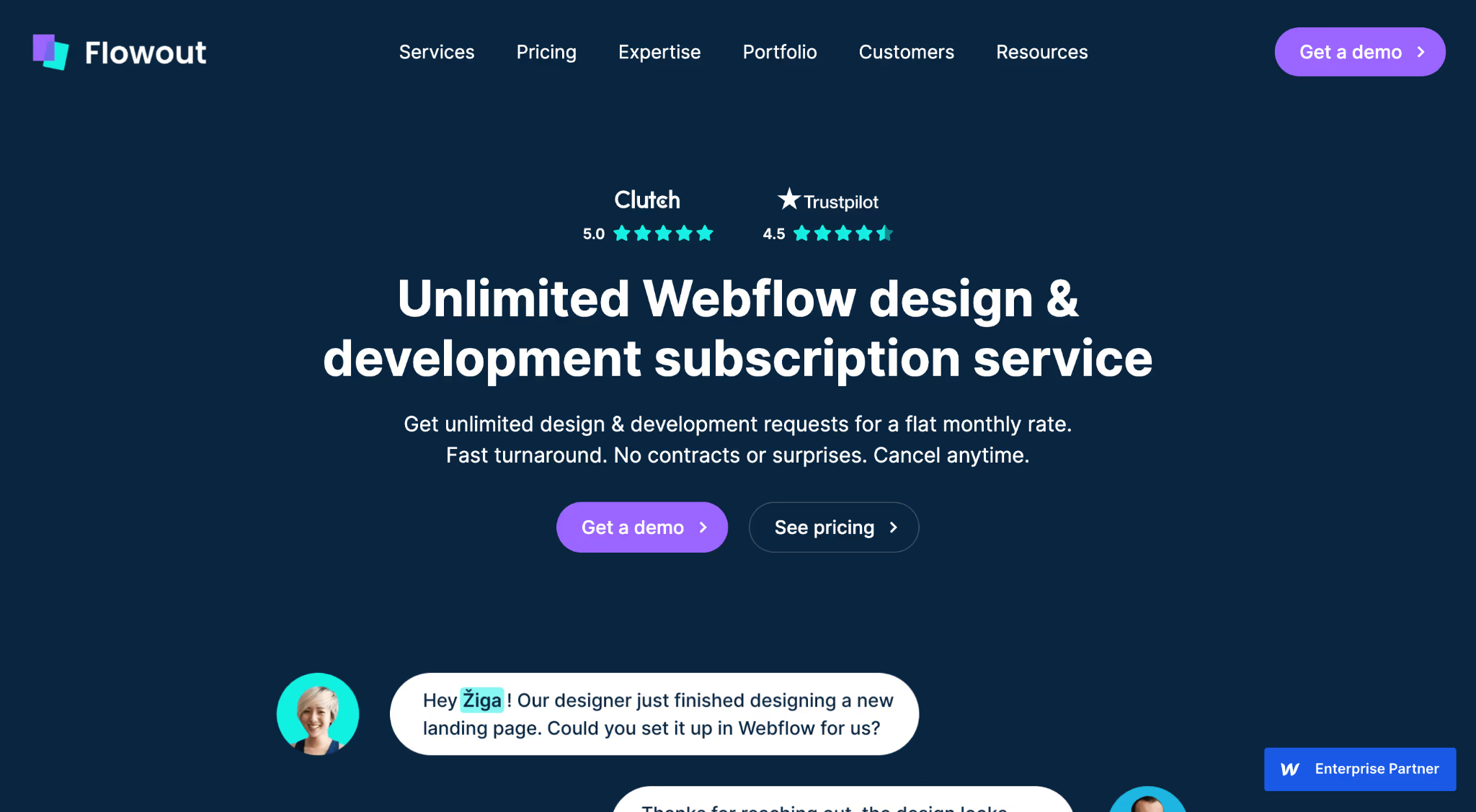
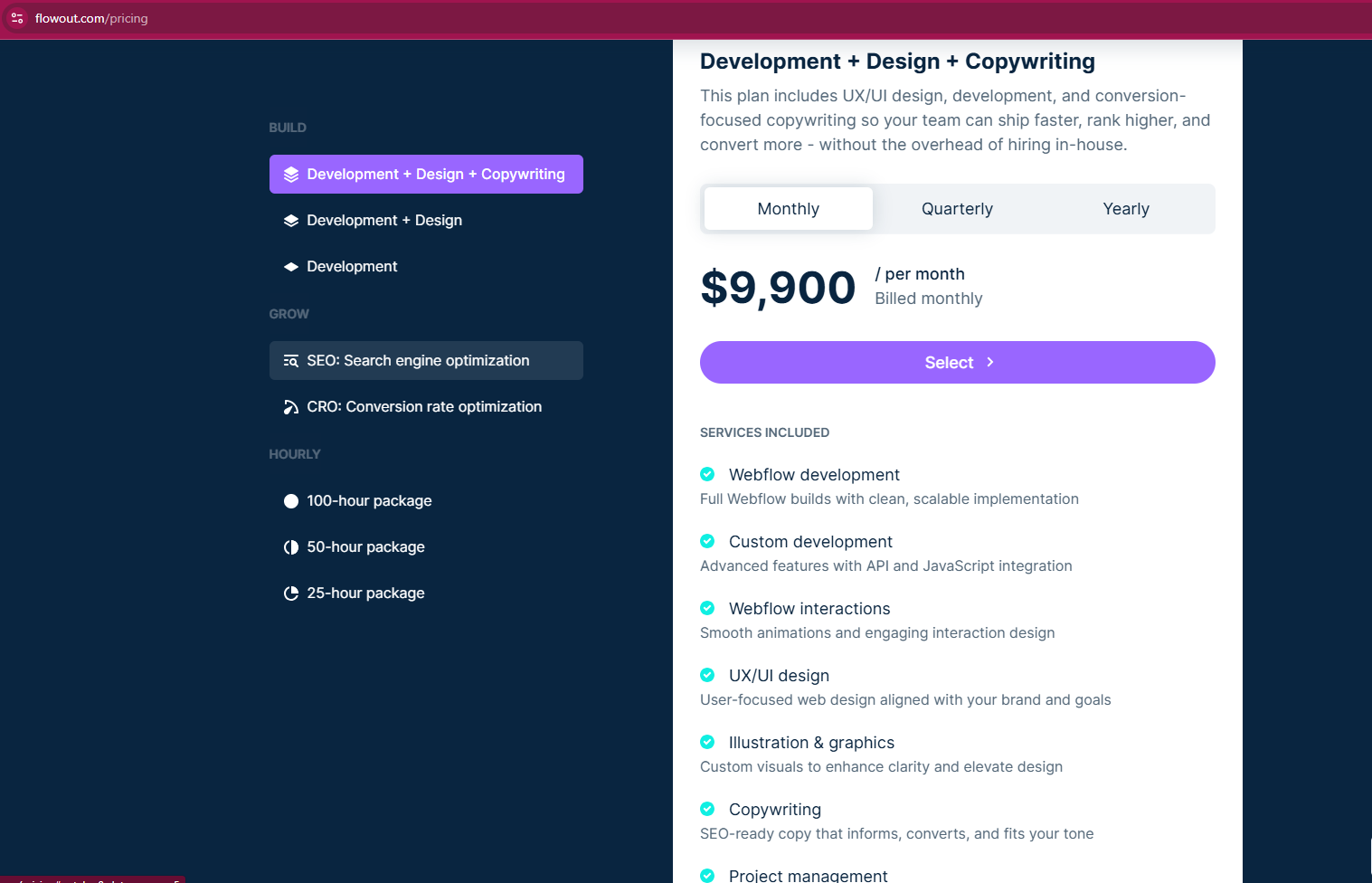
Flowout offers an unlimited Webflow subscription priced by team composition: Development + Design + Copywriting at $9,900/month, Development alone at $5,900/month, and Development + Design at $7,900/month, billed monthly, quarterly, or yearly. Clients submit unlimited requests, and the team delivers them one at a time within one to three business days. Clients can cancel anytime.
Flowout also offers 25, 50, and 100-hour packages for clients who prefer hourly billing.
Flowout uses ManyRequests for its agency operations. The founder, Luka Mlakar, says, "We run a twenty-plus person Webflow agency. Assigning and delegating projects and client requests has been key for us to scale. ManyRequests helped us do that with a solid client portal solution."
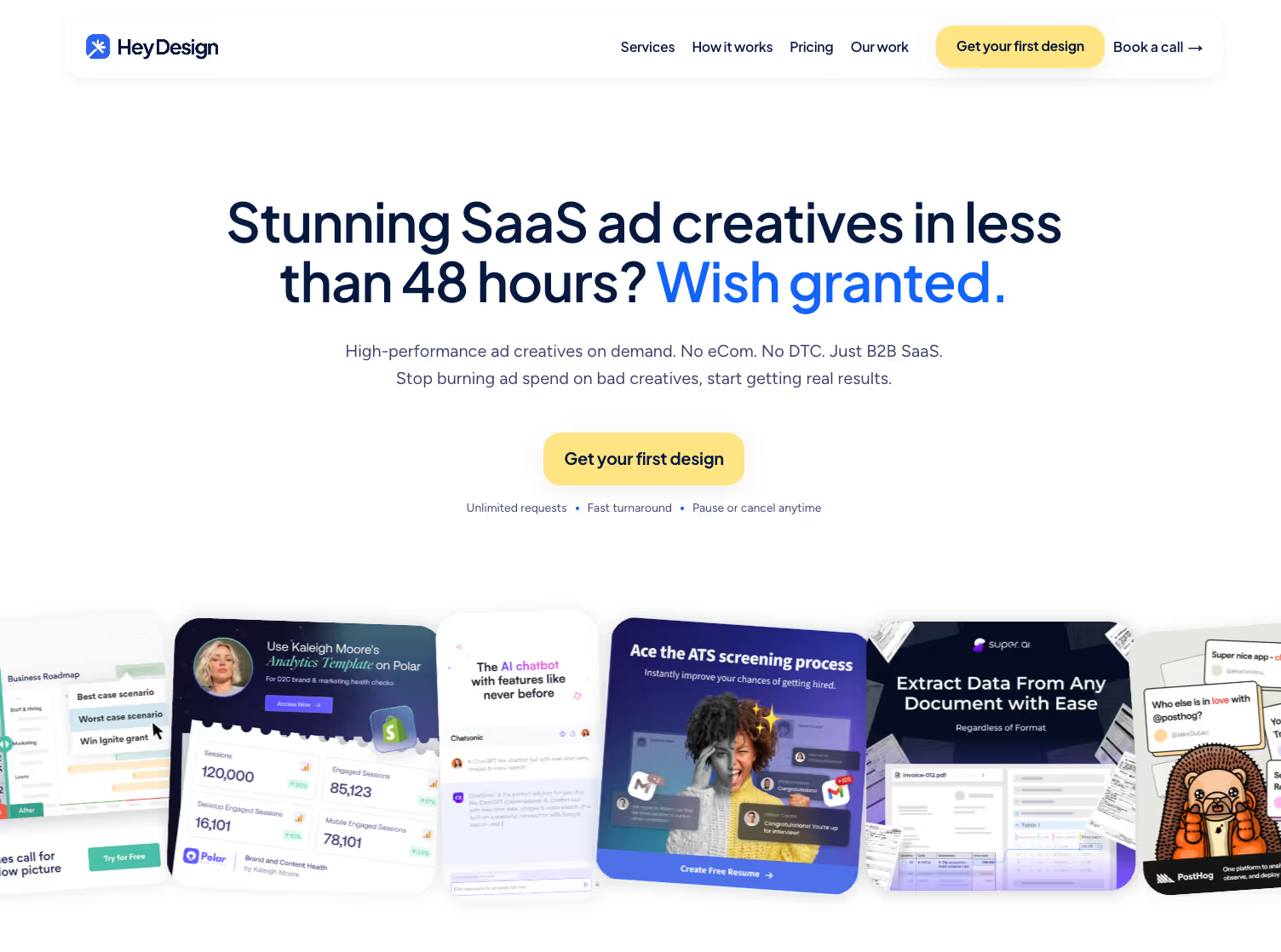
HeyDesign productizes ad creative for B2B SaaS into three flat plans:
Every plan includes one active request with an average 48-hour delivery, a dedicated PM, and clients can pause or cancel anytime.

HeyDesign onboards clients through ManyRequests checkout forms, then runs proofing and billing in the same portal.
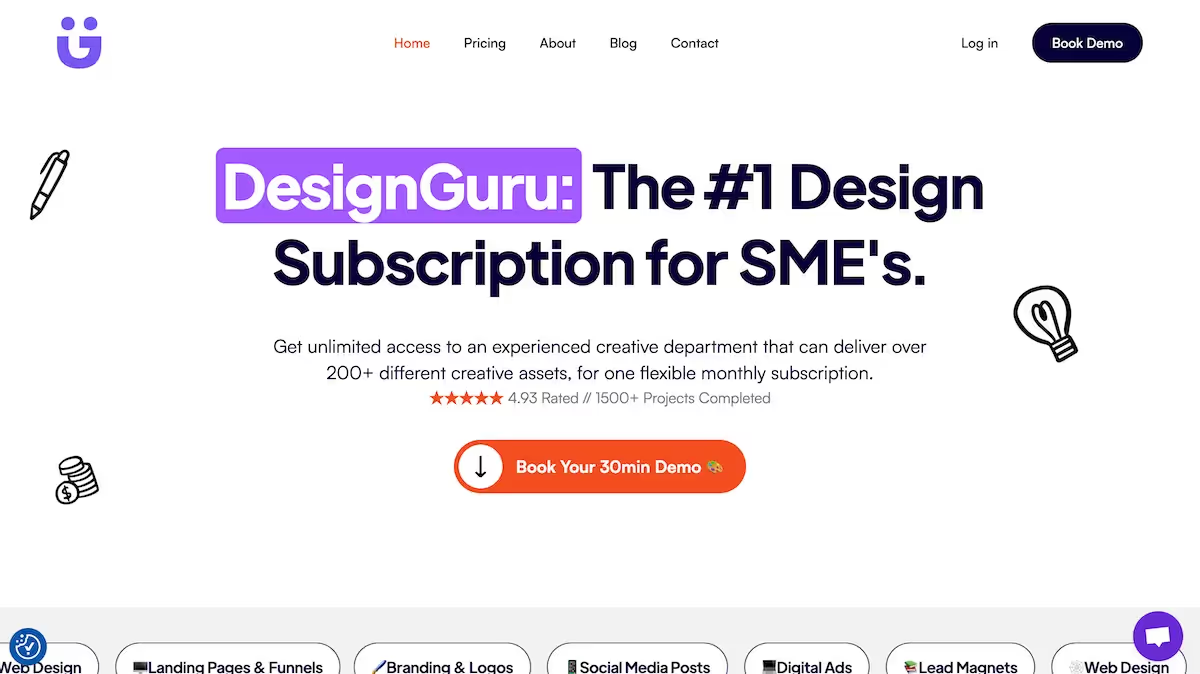
DesignGuru tiers a design subscription as Core at £599/month, Pro at £799, and Ultimate at £999. These are paid quarterly at 20% below the monthly rate, with a 14-day money-back guarantee.
Each tier is unlimited brief submissions and revisions with a 48-hour average turnaround, a dedicated PM, and a client portal. The Pro tier adds video and motion and the Ultimate tier adds web and app design plus an optional white-label.
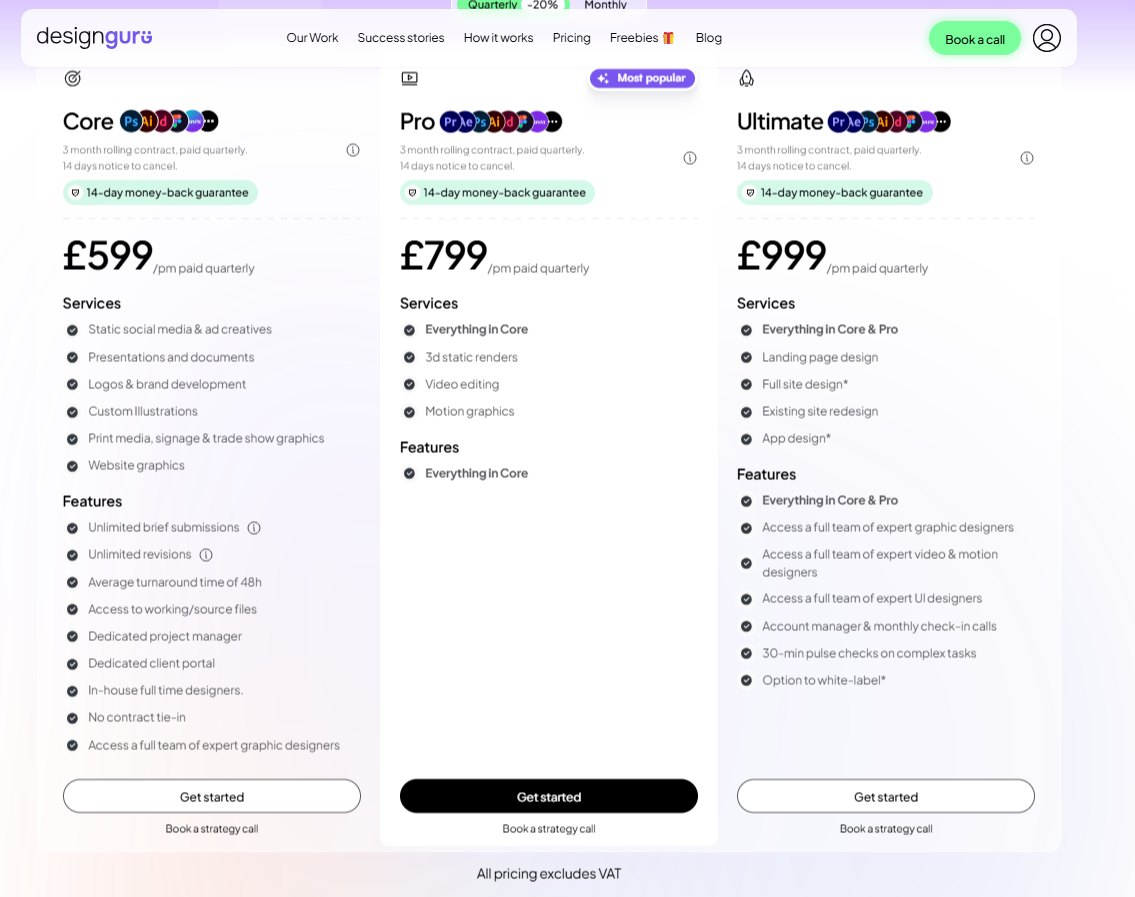
DesignGuru also uses ManyRequests to manage its subscription agency, from checkout to the client portal.
Read more: The Productized Service Guide: How to Build, Price, and Scale [2026].
The infrastructure for the new model is where ManyRequests earns its place: create a client portal with a 14-day free trial.
A subscription, or flat-rate, model is the best fit for a productized agency. You charge a fixed monthly fee for deliverables handled through a queue, which gives you predictable recurring revenue and a delivery process you can standardize and scale.
A retainer sells time or reserved access, often a block of hours, while a subscription lets you take several requests, but you’re bound to deliver each at a specific time you’ve communicated upfront. The practical difference is overhead: retainers usually require time tracking and overage conversations, while subscriptions remove both. You don’t have to track time; you deliver when you’ve said you would.
Credit-based pricing has clients buy a bank of credits each month and spend them on requests, where different request types cost different amounts. It keeps the predictable monthly payment of a subscription while giving clients flexibility when their needs vary month to month. On ManyRequests, you set the credit cost per service and can allow unused credits roll over.
You can audit your clients for recurring needs and structure these “recurring needs” into services with their standalone pricing structure. Then, build your intake and delivery workflow, preferably through ManyRequests, so you can keep your agency operations and task tracking system in one place.
1. See how ManyRequests works in real life. Start a free trial and experience how productized agencies centralize requests, reduce chaos, and streamline delivery, without changing their entire workflow.
2. Read our Implementation Guide to launch smoothly with your team and clients.
3. Follow us on LinkedIn and YouTube for practical agency growth strategies
4. Check out The Productize Blueprint to learn how to turn your services into a scalable, productized offer.
Peace Akinwale is a B2B SaaS content writer and strategist who creates BOFU content and how-to articles that drive measurable growth for software companies and agencies. Over six years, he's worked with clients like Marker.io, Pangea.ai, Spicy Margarita agency, and HigherVisibility to turn technical topics into content that converts, and has helped a client achieve 233% organic traffic growth within six months of taking over their blog.