Free Work Quote Template [Docs / DOCX]
You impressed the client during your meeting, but you can still lose the deal if your quote looks messy or confusing. A well-crafted work quote template makes you look professional and trustworthy, helping you win more projects.
The tricky part is pricing your work reasonably while showing clients the real value they're getting. In this guide, you'll learn what every professional creative agency quote template needs, how to present your pricing, and get a free service quote template to make the whole process easier.
Why creative agency quotes need a different approach
Your agency quote needs to show more than just prices and tasks.
Unlike basic contractor templates that list simple work items, creative agency quotes must explain your entire creative process, including your strategy and ideas, as well as the number of rounds of changes included.
Regular templates fail to capture key aspects of creative work, such as concept development and strategic planning. Your quote should demonstrate the real value you bring to a client's business, not just look like a basic price list that makes your creative work seem ordinary.
How clients think about pricing
Clients see creative work as more than just completing tasks; they want innovation and tangible impact on their brand, so your quote needs to explain the value of your work, not just list prices.
When you show clients that you're a strategic partner who understands their bigger goals, you'll win more projects instead of competing only on price.
Now that you understand why agency quotes need a different approach, let's break down the seven essential components that make your quote both professional and persuasive.
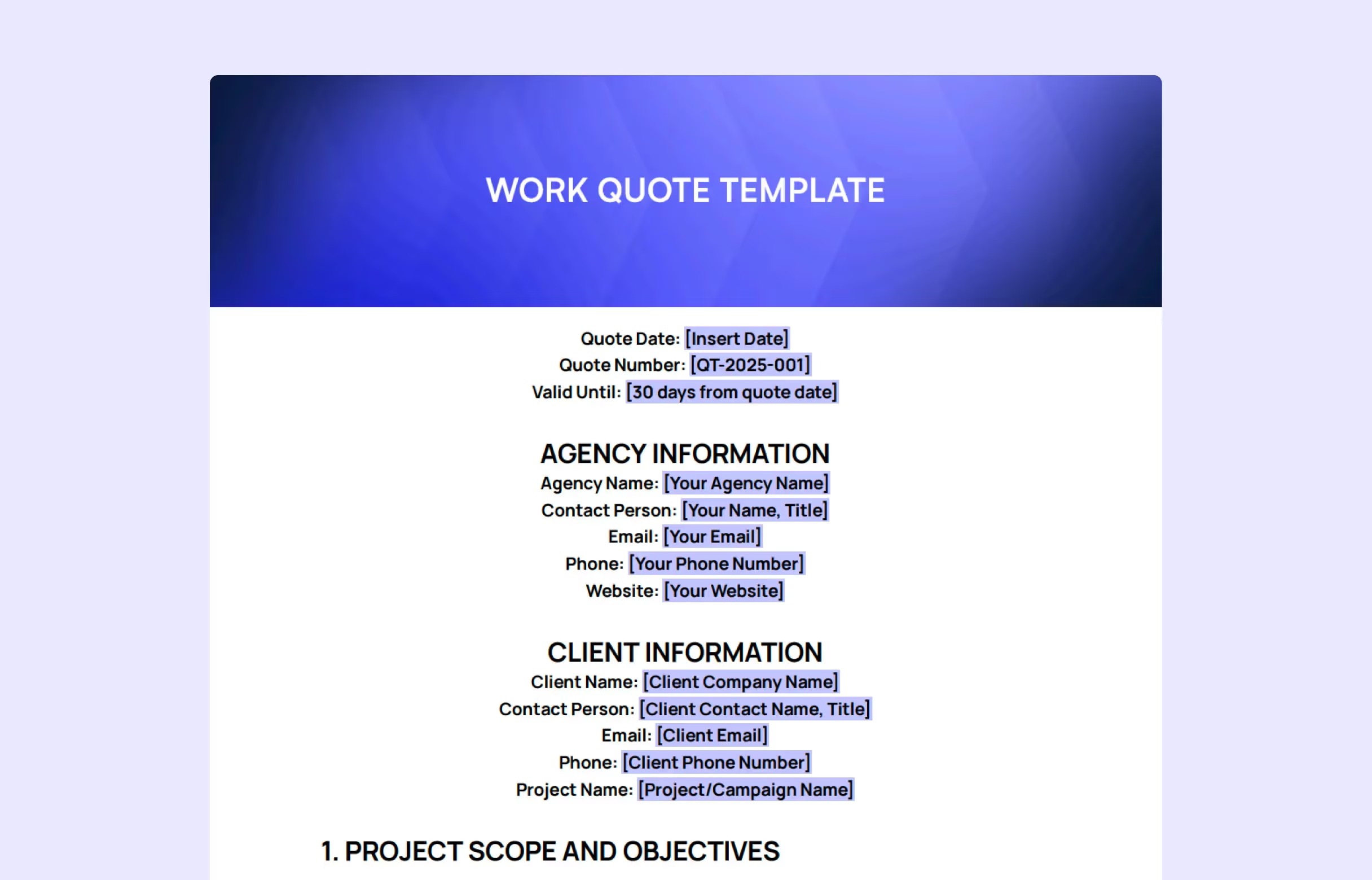
Essential components of a work quote template for creative agencies
Every professional quote has seven key components that clearly explain your work to clients and protect your business.
Client and project information header
Begin your quote with a header that includes the client's name, company, contact information, project name, quote number, and date, ensuring all details are clear and organized.
Always include an expiration date, such as "This quote is valid for 30 days," to protect yourself from price changes and encourage the client to respond promptly.
Project scope and objectives
Write a clear summary of what the client wants to achieve using the exact words they used when talking to you, showing you listened and helping avoid confusion. This section protects you from scope creep (when clients request additional work later) by ensuring everyone agrees on what you will do from the start.
Detailed deliverables breakdown
List every specific item you'll create– logos, website pages, brand guidelines, videos, social media graphics. For each deliverable, include the quantity and format.
For example: "3 logo variations in PNG and vector formats."
Clarify what's included and what's NOT included. This prevents confusion later. State the number of revision rounds you'll provide per deliverable, such as "3 rounds of revisions per logo concept."
Project timeline and milestones
Include start and end dates, as well as essential milestone dates, in your quote to keep everyone on track. Clearly state when the client needs to provide you with content, feedback, or approvals.
Setting these expectations up front helps avoid delays, as your schedule depends on the client fulfilling their part on time.
Pricing structure and investment breakdown
Display the total price at the top and choose between listing each item separately (suitable for complex projects) or providing a single bundled price (ideal for simpler projects).
Include your payment plan with an upfront deposit, like 30%, followed by payments at key milestones, and a final payment upon completion of the work.
Terms, conditions, and fine print
This section protects both you and your client by including important rules like your revision policy, rush fees, cancellation terms, and who owns the creative work you make. Also, clarify that any additional work beyond what was agreed upon requires a new proposal, and include a cancellation fee if the client terminates the project prematurely.
Speaking of protecting your business, here are five often-overlooked costs that should be factored into every quote:
Checklist: 5 Hidden costs to include in every work quote
- Project management hours
- Revision rounds beyond the included number
- Licensing fees for stock assets
- Software or tool subscriptions
- Contingency for unexpected expenses
Clear call-to-action and next steps
Tell clients exactly how to accept your quote (like signing it or sending a deposit) and what happens next, such as a kickoff meeting or onboarding steps. Include your contact information for questions, and create urgency by mentioning if you have limited project slots or a special offer that is about to expire.
With these seven components in place, your quote structure is solid. But the most challenging part for most agencies is pricing.
Let's tackle how to calculate and present your numbers with confidence.
How to calculate and present pricing
Pricing is often the most challenging aspect of creating a quote, but selecting the right model makes it significantly easier. Understanding how to quote creative work properly means selecting a pricing approach that reflects your actual value.
Value-based vs. Hourly vs. Fixed-price quoting
There are three main pricing models for creative agencies, and each one sends a different message to your clients. Whether you're using a design work estimate template or building quotes from scratch, understanding these models helps you price confidently.
- Value-based pricing. You charge based on the value or business impact your work creates. This model works best for creative agencies because it reflects the true transformation your clients want.
Flowout, a Webflow agency that has grown to $1M ARR, employs a hybrid pricing approach, offering both subscription-based maintenance plans and hourly packages (10, 20, or 40 hours). This flexibility enables them to cater to diverse client needs while maintaining predictable revenue through subscriptions and accommodating one-off projects through hourly packages. They manage all their quotes and client projects through ManyRequests, which helps them keep everything organized as they scale.
- Hourly pricing. You are billed for the actual time spent. While straightforward, this approach can undervalue creative work by focusing on hours instead of outcomes. It makes clients see you as commodity labor instead of a strategic partner.
- Fixed-price. You offer a single, all-inclusive fee for the entire project scope. This provides clients with budget certainty, and you receive predictable revenue. Many agencies prefer this because it focuses on deliverables and outcomes.
How to present your prices
Present your prices confidently without apologetic language. The way you talk about your pricing influences how clients perceive your value.
- Use "investment" language instead of "cost." Frame your pricing as an investment in the client's business transformation. This subtly shifts perception from expense to value and return.
- Try price anchoring by offering tiers. Present a premium option first to set a reference point. This makes your mid-tier options seem more reasonable, increasing your average deal size.
- Handle "too expensive" objections before they happen. Emphasize value and outcomes in your agency estimate template. Highlight the strategic transformation your work enables. Use case studies or testimonials to support your pricing justification. Offer different package options to give flexibility.
Once you've determined your pricing strategy, how you present that information becomes critical to winning the project.
Work quote tips that win more clients
How you present your quote is just as important as what you include in it. Small design and personalization choices in your service quote template can dramatically increase your acceptance rate.
Design and presentation matter
Choose the correct project quote format– PDFs for professional quotes that look perfect every time, or interactive web-based quotes with clickable features for increased client engagement.
Brand your quote with your logo and colors, use plenty of white space to keep it organized, and add visuals, such as mood boards, to help clients picture the final work.
Personalization wins projects
Reference specific goals your client mentioned during discovery calls. Generic quotes feel like templates, but personalized quotes feel like partnerships.
Add a brief "Why We're the Right Fit" section explaining why your agency is the best choice. Include a relevant case study snippet or testimonial from a similar project to build credibility.
One agency saw a 34% increase in quote acceptance after adding personalized content, a tailored "why us" section, and a relevant testimonial. Small personal touches can make a significant difference in conversion rates.
Even with a perfectly crafted quote and strong follow-up, client needs often evolve. Here's how to handle changes professionally
Follow-up strategy
Send your quote within 24 hours while the client is still excited, then follow up 2-3 days later with a friendly message that reminds them of their goals. If they still don't respond or are unwilling to negotiate, remain calm and helpful by explaining the value of your work without becoming defensive.
Managing scope changes and quote revisions
Even the best quotes sometimes need adjustments as projects evolve. Having a straightforward process for handling changes protects your profitability while keeping clients happy.
- Include formal change order clauses in your contract that define what counts as a scope change. Require written approval before doing any extra work beyond the original quote.
- Know when to revise a quote versus when to stand firm. Revise your quote when changes significantly alter deliverables or timelines. Stand firm on scope limits for small requests that exceed your agreed revision rounds.
- Try the "budget buffer" strategy: include a 10-15% contingency in your project budget. This safety net enables you to handle minor, unexpected changes without having to renegotiate each time.
Once your client approves the quote, whether original or revised, it's time to turn that agreement into action.
Conclusion
Your creative services quote isn't just a price list– it's a sales tool that shows clients you're professional, organized, and worth their investment. The right template saves you hours of work and helps you win more projects by communicating clearly and confidently.
We've created a free quote template for agencies that you can download in Google Docs or PDF format, customize with your brand and pricing, and use for every new project.
Ready to streamline everything? ManyRequests is your all-in-one system that brings together quotes, approvals, project delivery, billing, and client collaboration in one place. Try it free for 14 days and see how much easier your work becomes.
FAQ
How to set up a quote template?
Use a clean, branded, and structured layout that includes all key sections, and leverage tools with customizable templates to increase efficiency. A solid project pricing template saves hours of repetitive work. Start with a basic template that includes your logo and colors, then save it so you can reuse it for every new client, eliminating the need to start from scratch each time.
How do you write a quote for work?
Personalize, define scope and deliverables clearly, break down pricing, state terms, and provide a clear call to action. Ensure you clearly outline what you'll create for the client and when they can expect to receive it, to avoid any confusion about what they're paying for.
How to professionally give a quote?
Deliver promptly, use confident investment language, brand your quote, follow up respectfully, and ensure easy acceptance and payment processes. Send your quote as a professional-looking PDF that makes it easy for clients to accept and pay you promptly.
.svg)